Welcome to CIRA Scope — news and insights offering a closer look for you to observe and zoom in on the people, partnerships, and progress happening in immigrant and refugee communities through CIRA’s lens.
Three former Peace Corps volunteers apply their global experience to immigration law
Oct. 27, 2026
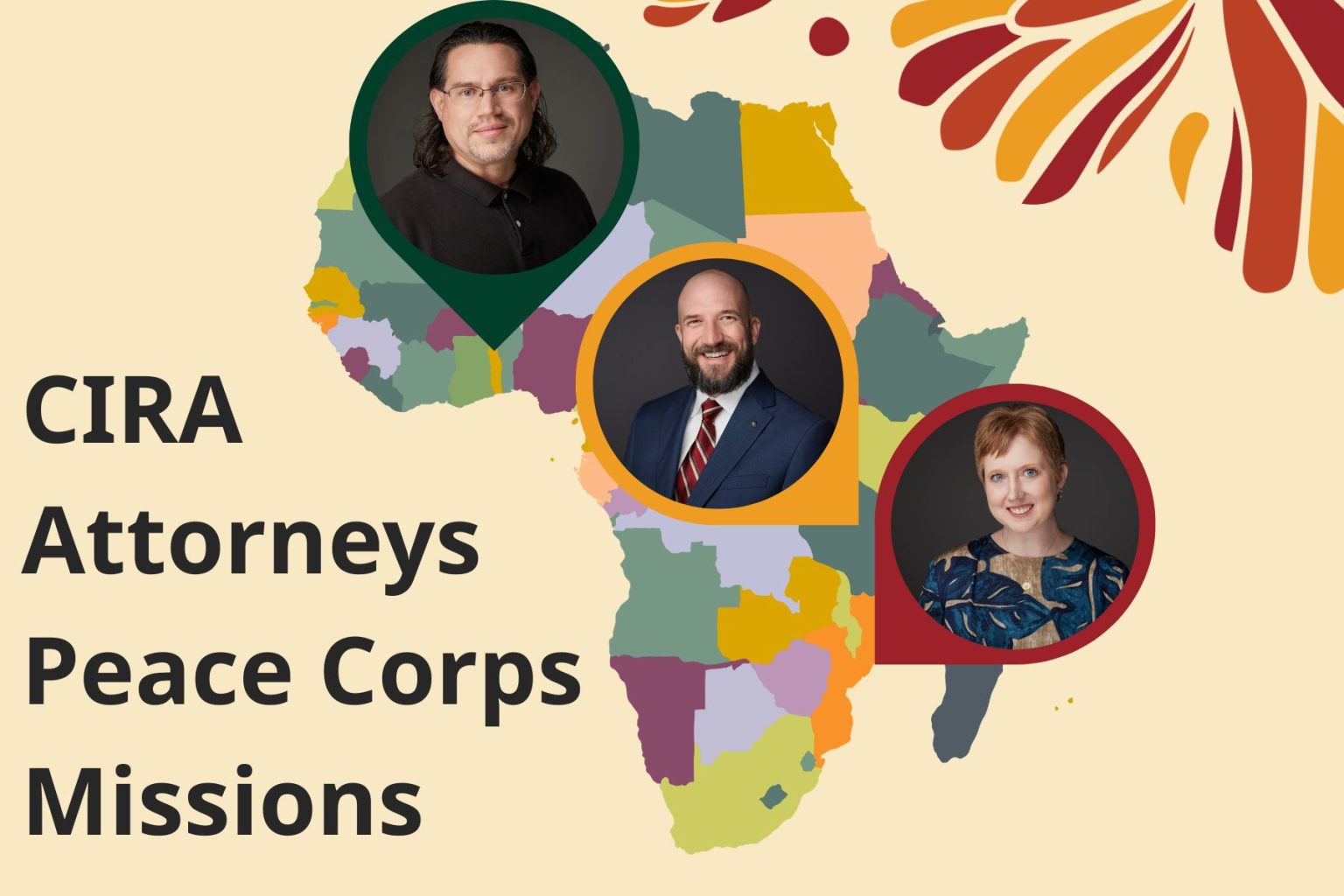
MOZAMBIQUE, TANZANIA, TOGO – Three young future immigration attorneys left everything they were familiar with and decided to serve the global community. In the early 2000s, Lead Attorney Gary Walters and Attorneys Jodi Garrelts and Jeremy Roose signed a two-year agreement to serve in the Peace Corps: an independent U.S. government agency that sends volunteers to promote global peace, friendship, and cross-cultural understanding around the world.
Since its induction in 1961 as well as since these CIRA attorneys’ missions, the Peace Corps has undergone numerous changes, ranging from a total shutdown due to the global COVID-19 pandemic to the current U.S. administration’s funding cuts amounting to $20 million for fiscal year 2026 and 2027.
The Peace Corps only deployed 3,322 volunteers in fiscal year 2025, which is around 6,000 fewer volunteers than its peak service year in 2011.
This decline in both participants and funding could have a potential cross-global negative effect on communities around the world, as the three CIRA attorneys who volunteered said not only did their service communities gain from the partnership, but they gained invaluable knowledge and experience as well that continues to influence their careers to this day.
Walters detailed how his experience in Togo emphasized the Peace Corps’ mission helps negate notions of U.S. supremacy.
“It definitely teaches you how to work with people, work with groups,” he said. “It’s not always, you know, well, this is how we do it here.”
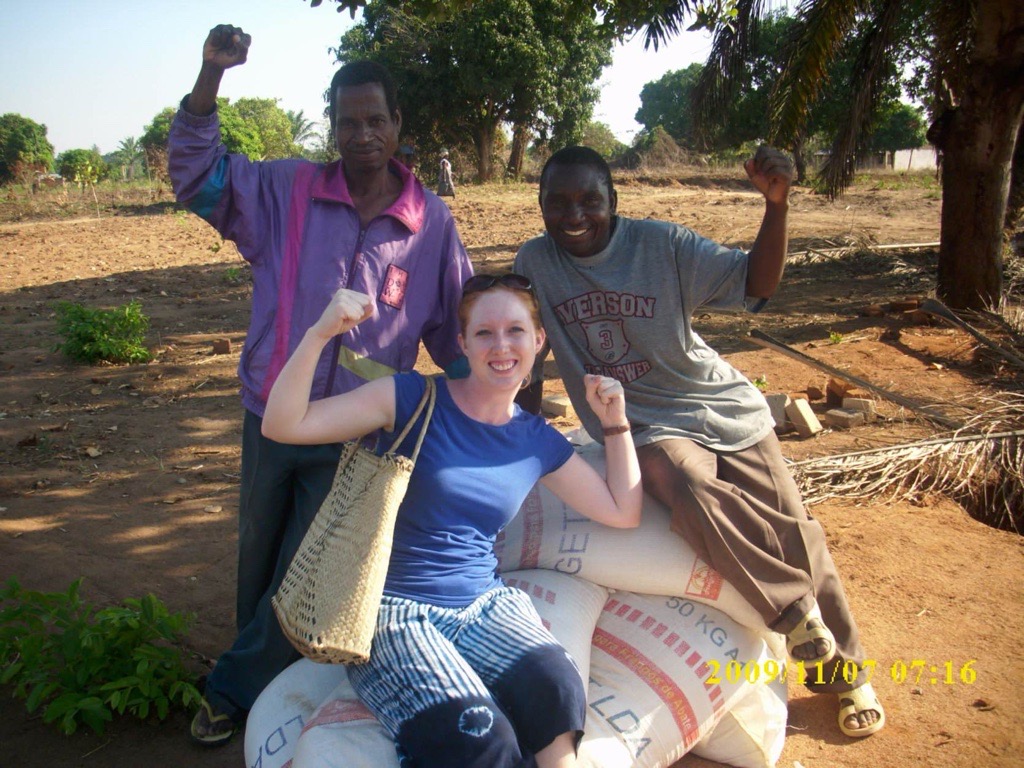
Garrelts, who was assigned to Mozambique, echoed this thought when she described a project she worked on with local HIV/AIDS education advocates. They were developing a way to both educate the public while also gaining some sort of income so they could continue their work sustainably.
“You don’t have to think that I’m all knowing. It’s: What do you want to do?” she said. They worked together to determine the advocates have experience in raising chickens, so Garrelts helped them build a coop. The advocates could then sell the eggs to fund their work.
Each of the three volunteers and now attorneys worked on HIV/AIDS knowledge and prevention in their local communities, with slight variations including language and responsibilities. Walters, placed in Togo, primarily used French. Garrelts, placed in Mozambique, primarily used Portuguese. And Roose, placed in Tanzania, primarily used Swahili.
“Africa is not a country. And so, each one of us had three completely different unique experiences. And it’s important for me to help people realize how diverse Africa really is,” Roose said.
Influence on immigration law career
Although none of the former Peace Corps volunteers currently work in HIV/AIDS education as they did before, each say the experience has influenced their current roles as immigration attorneys.
Roose said the experience has helped his overall understanding of different client circumstances. He knows what it feels like to be vulnerable in a new place, speaking a language that isn’t his first, and learning new social customs.
“I got a chance to see what it was like for somebody back home. And what success looks like there,” he said.
Along with an increased understanding of client situations, Garrelts attributes a learned skill from her Peace Corps days to her strategy as an attorney.
The countries to which Peace Corps volunteers are sent often have high and more visible levels of poverty. Garrelts said although challenges in immigration law are quite different than challenges experienced in rural Mozambique, it’s the process by which one handles a challenge that can be applied the same way.
“I think I took from Mozambique, being resourceful, being flexible, not giving up, trying to think, trying to be creative,” she said. “Like, how can we make this work? Or what is the best thing we can do with this, with what we have?”
Before she served in Mozambique, Garrelts describes herself as shy and someone who would not have considered law as a career. But the Peace Corps experience made her brave, a gained attribute that motivated her to apply for law school.
CIRA attorneys work with clients from around the world. And when a client comes from the same country or region in which an attorney has lived, it helps build a connection.
“The best thing is I think about the clients; they just feel more comfortable with me knowing that I’ve been there, and I’ve experienced the same culture and ways that they’re used to,” Walters said.
Changing Worldviews
Walters and Garrelts devoted their service contract to HIV/AIDS awareness and education. Roose conducted this work by evening while during the day, he taught high school-aged students physics.
“My school, my students were all fantastic, very motivated,” Roose said, even though he admitted they may not have had the goal of becoming a physicist.
But Roose didn’t just teach them; he also learned from them.
“I got to see how like, how rich people’s lives are without being wealthy. And that really made me appreciate everything I have a lot more,” he said.
Tanzania has opened multiple refugee camps to provide relief for surrounding countrymen seeking protection, something that stood out to Roose. He said it was stunning to see the giving culture of the country.
“They take in hundreds of thousands of refugees. And here’s one of the poorest countries in the world,” Roose explained. “We’re one of the richest countries in the world. We could help out a lot of people.”
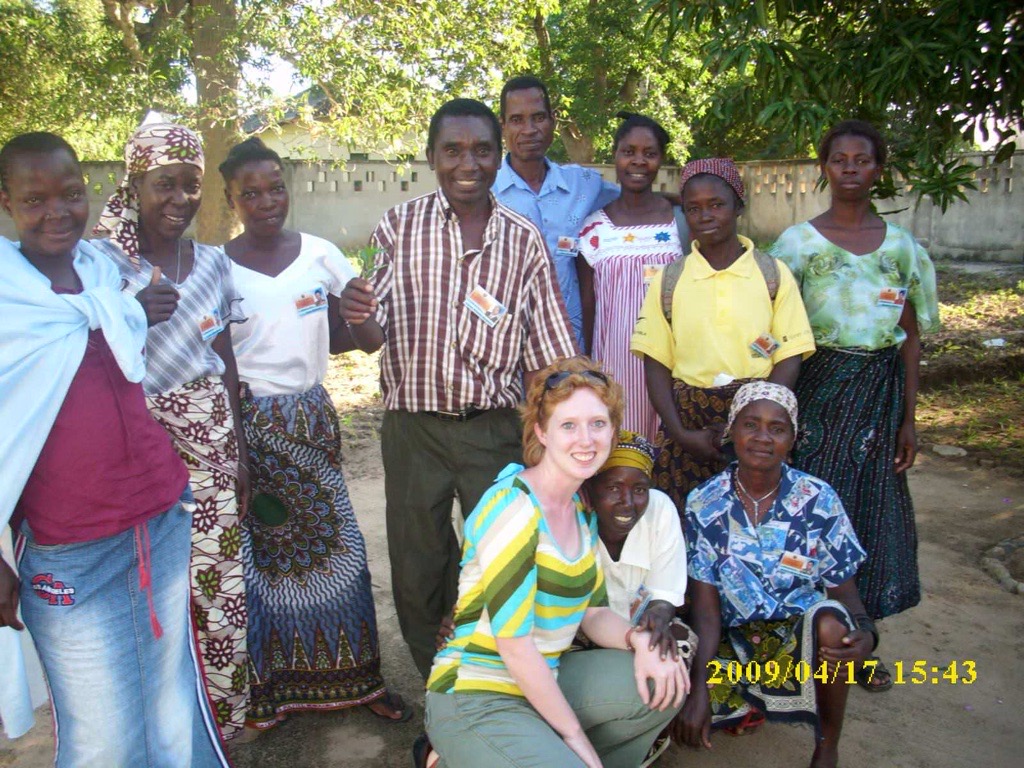
Garrelts described the community she worked in as one filled with music, dance, and joy. All of these things existed despite the country recovering from an intense civil war.
“When the civil war ended, everyone was encouraged to go back to school. So, this security guard that I knew at the NGO building, he had his school uniform on. He was going to school; he was going to finish his education,” she remembered. “I don’t know, just the optimism is incredible.”
As part of the health clinic Walters worked at, infants were administered vaccines and checkups—he said this was one of his favorite parts.
“I like that part, just making sure that they were healthy, you know, and seeing those kids growing up,” he said with a smile.
Each Peace Corps alumnus said they would recommend others to also take the dive and serve their global communities.
In 2022, Immigrant Legal Center and Refugee Empowerment Center merged, and the combined nonprofit organization is now CIRA, the Center for Immigrant & Refugee Advancement. Our diverse team of experts provides exceptional, compassionate legal representation, refugee services, and social work services. We take on the most complex immigration cases, resettle refugees from around the world, and ensure all clients have access to resources they need to live. Operating in 6 different offices from Council Bluffs to Scottsbluff, our team of more than 100 full-time employees helps communities welcome immigrants and refugees as they build their lives here. We assist with all forms of family and humanitarian-based immigration, and we never turn any family away due to inability to pay.

To empower immigrants and refugees to live confidently through high-quality legal representation, resettlement, and social work and to create welcoming communities through education and advocacy.
Quick links
Newsletter sign-up
We are a 501c3 nonprofit. Our EIN number is 74-3195841. The information contained in this website is provided for informational purposes only and should not be construed as legal advice on any matter.
Copyright © 2025 CIRA. All Rights Reserved.