Welcome to CIRA Scope — news and insights offering a closer look for you to observe and zoom in on the people, partnerships, and progress happening in immigrant and refugee communities through CIRA’s lens.
Summer camp encourages immigrant and refugee children to learn, connect, and simply be kids
August 20, 2026
Lincoln, Neb. — Children in CIRA’s Social Work and Refugee Services programs had the opportunity to put aside everyday worries about their or their families’ statuses and just be kids.
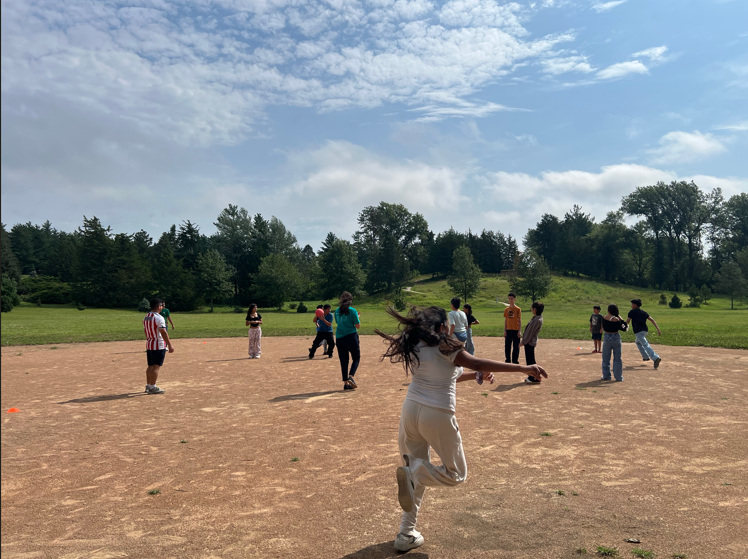
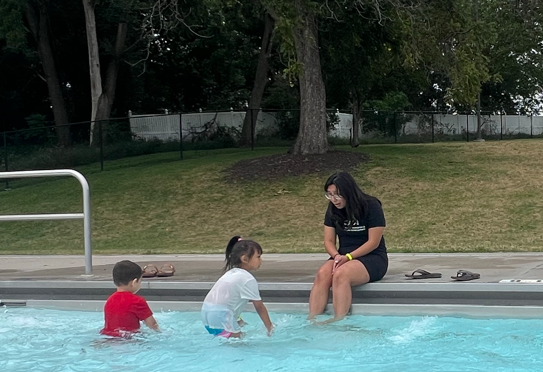
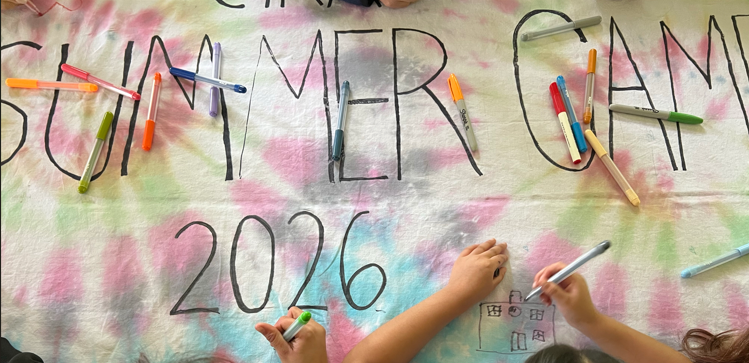
CIRA’s Summer Camp, hosted in Lincoln and Omaha, offered children time swimming, playing games, creating art, and making new friends. For three days, the kids simply focused on having fun and building relationships with CIRA staff and other kids. One day was devoted to swimming, one for field day, and one for art.
Many of the children CIRA serves are navigating different stages of the immigration process and may have limited opportunities for interacting with peers who have similar experiences.
“It’s a way to just destress from what’s going on at home sometimes,” said Social Worker Aramy Guzman-Abelino. “You could see a lot of the kids’ drawings. They were happy images, a lot of family, siblings, a lot of love.”
Social workers in both cities organized the free summer camp, so it was also a way for CIRA staff to see a different side of their clients they work with throughout the year.
“I’ve really enjoyed getting to see the kids outside of the legal and social work environment. We get to see them simply being kids, making friends, and enjoying themselves,” said Social Worker Sarahi Villegas Perez. “Many of our clients are unable to participate in summer activities due to family responsibilities or financial barriers, so being able to provide this opportunity has truly been amazing!”
Legal Assistant Gregorio Hermosillo Contreras, who helped with the summer camp, echoed Villegas Perez’s sentiment.
“It was nice seeing the kids laughing and having fun outside of the office and serious meetings,” he said.
This year marked the second year CIRA has hosted the summer camp. Organizing the event took coordination among social workers, interns, and other CIRA staff, from planning activities and ordering supplies to communicating with families, arranging transportation, and preparing waivers.
Guzman-Abelino said the camp has grown significantly since its inception last year. Organizers continue to learn new lessons as the summer camp program progresses. As an example, Guzman-Abelino listed last year’s challenge focused more on a large attendance, while this year’s challenge focused more on unpredictable weather.
But as Social Work Director Monica Meier says: “Social workers are made for quickly responding to challenges.”
And that’s exactly what Guzman-Abelino and her fellow summer camp lead social worker Ana Valadez did.
When it rained, they moved the activity to a covered area. When the sun was unforgiving, they took the kids to the pool.
Accessible summer fun
About 30 children signed up for the Omaha camp, with even more signed up for the Lincoln iteration.
Social workers identified participants based on a variety of factors, including siblings who could benefit from attending together, the length and strength of a family’s relationship with CIRA, and the children’s own interest in participating.
The camp was a collaborative effort across CIRA’s teams. In Omaha, staff divided responsibilities ranging from communicating with community partners to gathering art supplies, setting up field day stations, and coordinating transportation.
The Lincoln camp similarly relied on support from staff across CIRA. With only a small social work team in Lincoln and a large group of children attending, Omaha staff and interns stepped in to help.
One aspect that didn’t act as a challenge as opposed to last year was language, Guzman-Abelino said.
She reflected the children comfortably switched between English and Spanish, and were able to connect even without fully understanding one language or the other.
Like through lunch trades.
In Lincoln, staff watched children trade snacks with one another and negotiate exchanges involving muffins, fruit snacks, and cookies.
“What stood out to me most was how quickly the children made friends. Within a short time, they were laughing and playing together, making sure no one was left behind. It gave them an immediate sense of connection and belonging, making the experience even more meaningful,” Villegas Perez said.
For the adults, the interactions were a little funny, and a reminder of how quickly children can make a seemingly simple experience one to remember.
“I’ve never seen kiddos so excited over sack lunches,” Guzman-Abelino said with a laugh.
One of her favorite moments happened during the art day where the kids were directed to create something that brings them joy. One boy decided to build an entire, life-sized robot out of cardboard and duct tape.
“He was just so happy and worked up building his robot,” Guzman-Abelino recalled. “Just seeing the great achievement he was doing, that was pretty great to see.”
Lincoln-based Social Worker Melissa Moreno, who ran the Lincoln summer camp, explained why these activities are important for children’s development.
“Play is a basic necessity for children and adults alike that is often overlooked,” she said. “Nothing is ever apolitical, but I think when we’re enmeshed in play, we can kind of let ourselves relax into joy. I think that’s so important for the kids we work with who often have excessive responsibility placed on them by so many external influences.”
CIRA’s entire staff looks forward to hosting next year’s CIRA Summer Camp, and maybe the robot may even make another appearance.
In 2022, Immigrant Legal Center and Refugee Empowerment Center merged, and the combined nonprofit organization is now CIRA, the Center for Immigrant & Refugee Advancement. Our diverse team of experts provides exceptional, compassionate legal representation, refugee services, and social work services. We take on the most complex immigration cases, resettle refugees from around the world, and ensure all clients have access to resources they need to live. Operating in 6 different offices from Council Bluffs to Scottsbluff, our team of more than 100 full-time employees helps communities welcome immigrants and refugees as they build their lives here. We assist with all forms of family and humanitarian-based immigration, and we never turn any family away due to inability to pay.

To empower immigrants and refugees to live confidently through high-quality legal representation, resettlement, and social work and to create welcoming communities through education and advocacy.
Quick links
Newsletter sign-up
We are a 501c3 nonprofit. Our EIN number is 74-3195841. The information contained in this website is provided for informational purposes only and should not be construed as legal advice on any matter.
Copyright © 2025 CIRA. All Rights Reserved.