Welcome to CIRA Scope — news and insights offering a closer look for you to observe and zoom in on the people, partnerships, and progress happening in immigrant and refugee communities through CIRA’s lens.
Resettlement services pivot to support refugees in Nebraska
Sept. 3, 2026
Omaha, Neb. — Refugee resettlement in Nebraska used to be one of the most robust programs in the country. Nebraska consistently ranked as one of the most welcoming states for refugees per capita.
Resettlement would consist of picking up a family from the airport, moving furniture into a home, and helping the adults find a job and the children a school. This support was government-funded for a total of 90 days.
At 91 days, those services cease, often before many families have fully secured employment or familiarity with complex systems in a new country.
In the previous administration, CIRA resettled about 1000 refugees per year in Omaha and Lincoln. Case managers assisted new Americans as they moved into their new homes, volunteers helped furnish those homes, and a major source of stress was relieved for those refugees.
As of January 2025, the U.S. has paused almost all refugees from entering the country. The only exception: white South Afrikaners.
“We may be in a moment where most formal resettlement pathways are paused, but the needs of refugees haven’t stopped,” Center for Immigrant and Refugee Advancement (CIRA) Director of Refugee Services Der Yang said.
The Refugee Services Team at the CIRA noticed this gap and took the steps necessary to close it: launch the Pathways to Stability Program.
The Pathways to Stability Program, or simply the Stability Program, provides targeted, ongoing support for refugees navigating life beyond that initial 90-day window.
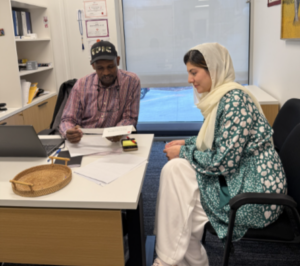
“This new program is about meeting people where they are, restoring a sense of stability, and reminding families they are not forgotten,” Yang said.
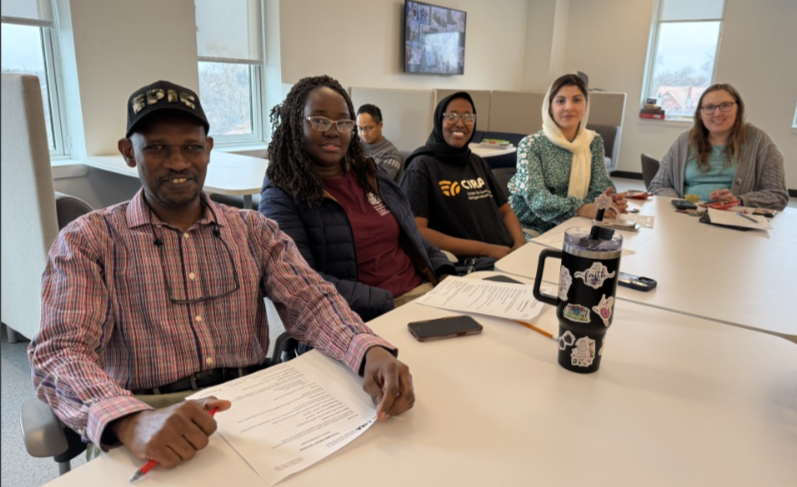
More than 70 families are currently in the program. They meet regularly with case managers to set goals, track progress, and navigate challenges as they establish their lives in Nebraska.
The CIRA Stability Program emphasizes sustainability in new Americans’ lives. The program includes support meant for housing, utilities, and food. These are critical to community members as they work toward employment, education, and integration in a new home.
According to the Migration Policy Institute, when refugees succeed in their communities, they contribute to economic development, protect other human rights, and provide long-term solutions to community challenges.
Yang said she expects more community members in need of the support the Stability Program offers when Medicaid is cut Oct. 1. SNAP benefits were already terminated for refugees and other immigrants without Green Card status.
“The Stability Program works closely with our case management team to provide coordinated, client support,” said Tarig Maki, CIRA Program Manager. “Through ongoing communication and collaboration, we ensure that clients receive the resources, guidance, and advocacy they need to achieve long-term stability and self-sufficiency.”
CIRA facilitates a thorough screening process to prioritize referred individuals who are most vulnerable to those federal policy changes that act as obstacles toward thriving and ultimately giving back to the community.
In 2022, Immigrant Legal Center and Refugee Empowerment Center merged, and the combined nonprofit organization is now CIRA, the Center for Immigrant & Refugee Advancement. Our diverse team of experts provides exceptional, compassionate legal representation, refugee services, and social work services. We take on the most complex immigration cases, resettle refugees from around the world, and ensure all clients have access to resources they need to live. Operating in 6 different offices from Council Bluffs to Scottsbluff, our team of more than 100 full-time employees helps communities welcome immigrants and refugees as they build their lives here. We assist with all forms of family and humanitarian-based immigration, and we never turn any family away due to inability to pay.

To empower immigrants and refugees to live confidently through high-quality legal representation, resettlement, and social work and to create welcoming communities through education and advocacy.
Quick links
Newsletter sign-up
We are a 501c3 nonprofit. Our EIN number is 74-3195841. The information contained in this website is provided for informational purposes only and should not be construed as legal advice on any matter.
Copyright © 2025 CIRA. All Rights Reserved.