Welcome to CIRA Scope — news and insights offering a closer look for you to observe and zoom in on the people, partnerships, and progress happening in immigrant and refugee communities through CIRA’s lens.
CIRA expands English Language Classes to meet growing community need
June 16, 2026
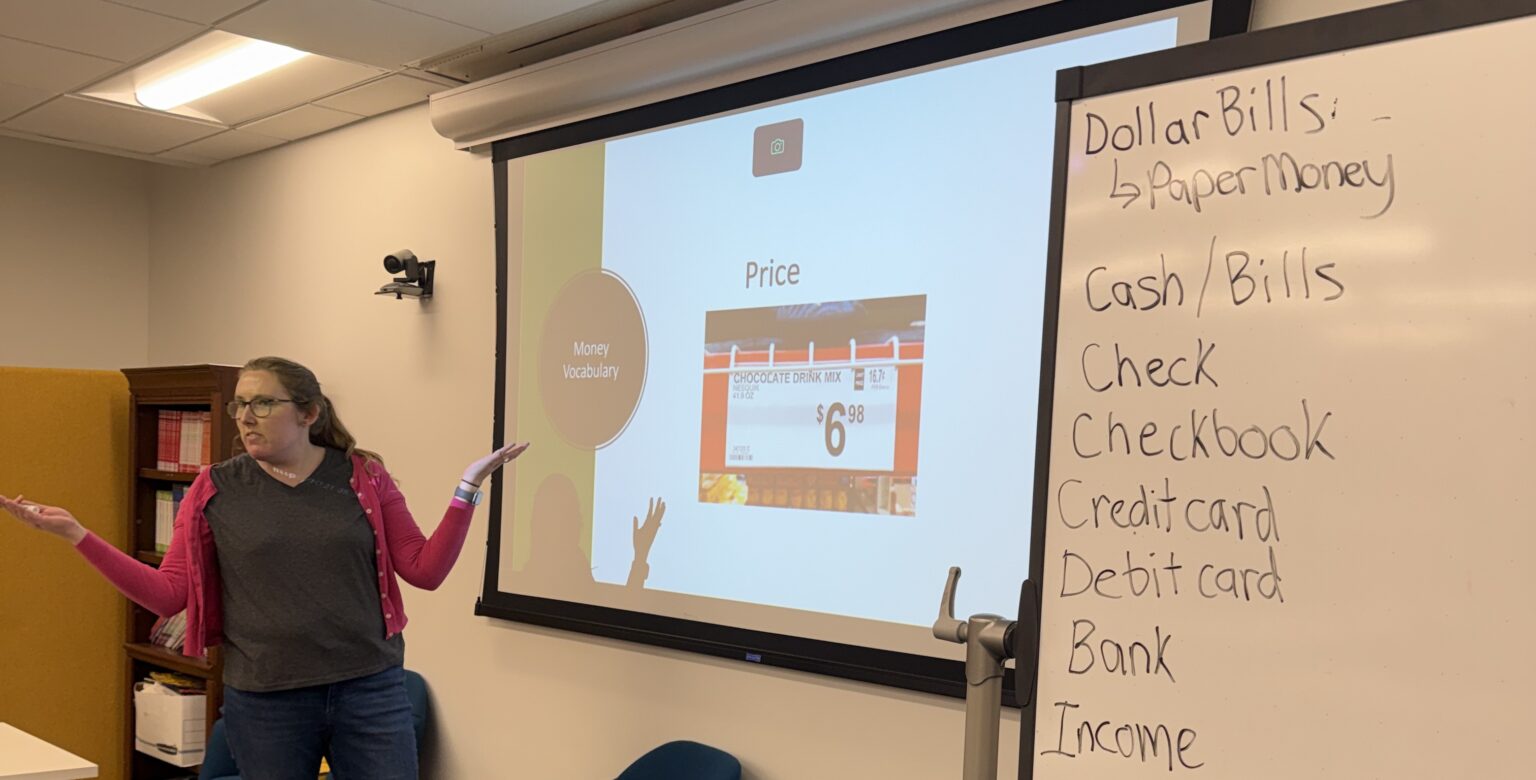
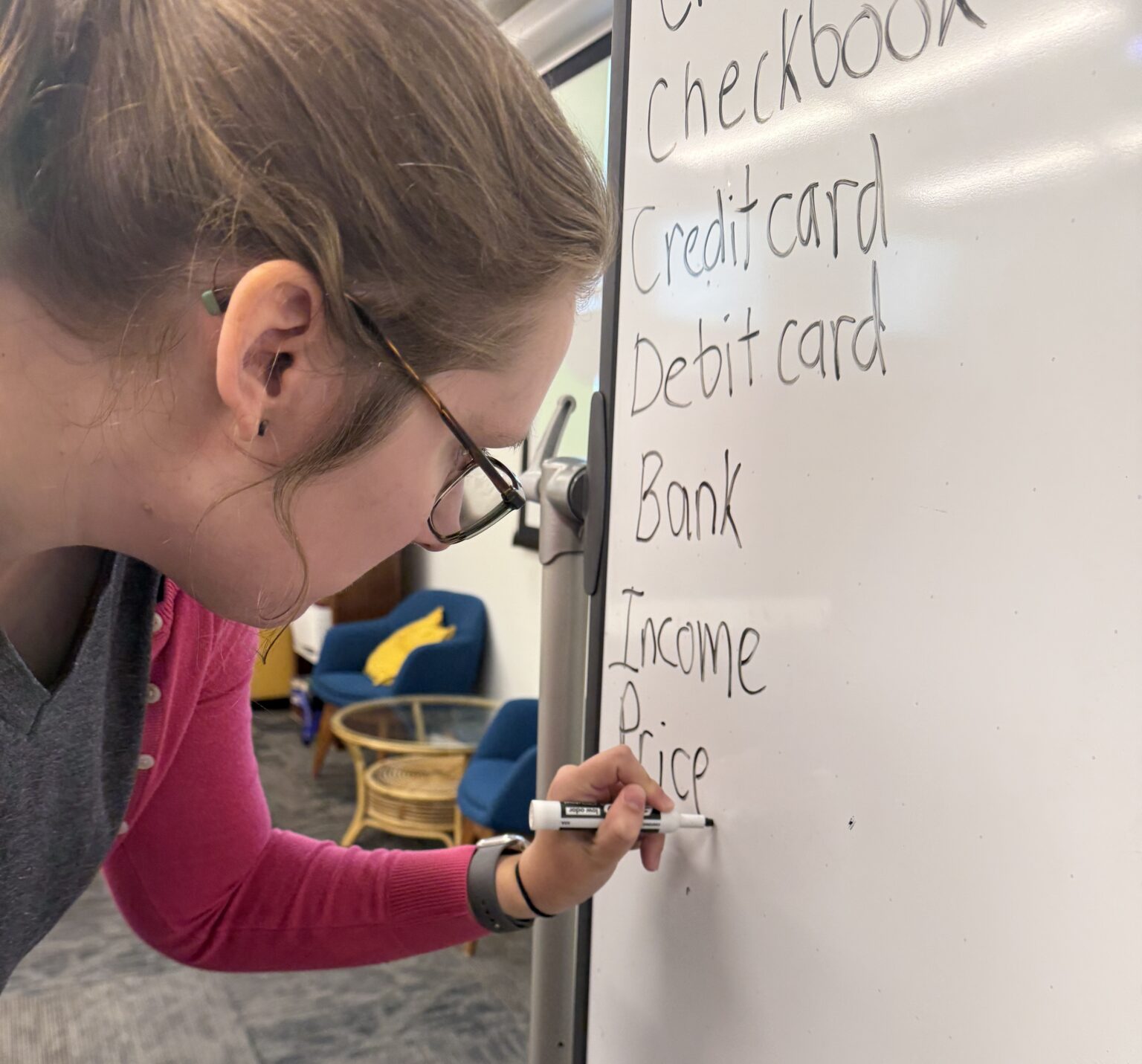
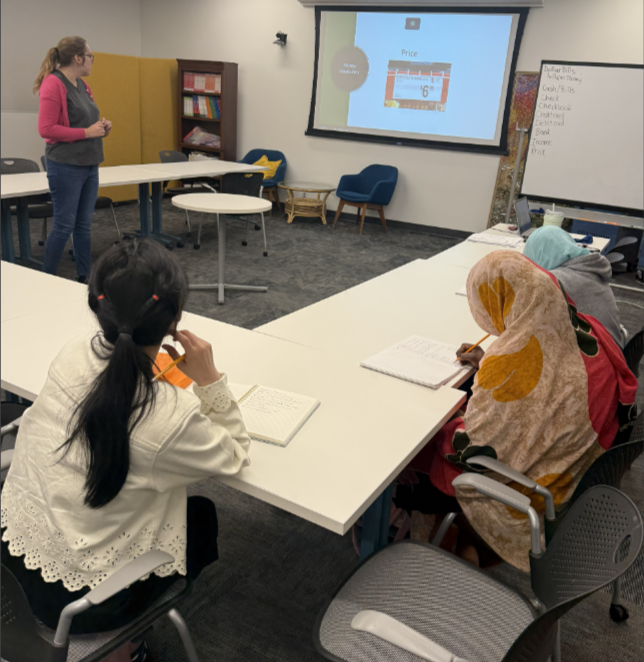
Omaha, Neb. — Claire Yocom stands in front of a basement classroom. She points to the projector screen showing a close-up photo of a grocery store shelf price tag.
“Price,” she says, as she walks in front of the students.
“Price,” they repeat, nodding their heads and writing down the word.
Yocom is an Education Case Manager at the Center for Immigrant and Refugee Advancement (CIRA). She is teaching the free English Language class the nonprofit now offers to all the people it serves.
English is consistently listed as one of the more challenging languages to master, but learning comes easier with a support system. That is one of the motivators for CIRA to offer this course.
“English class is helping me with going shopping. Without the class, shopping and buying things was very hard, but now it is easier,” one student said at the end of a Monday class.
These classes create a space for people to learn, practice, and grow together. In the CIRA classroom, language learning isn’t just about grammar; it’s about developing confidence in a new country, finding connections, and forming a community.
For many immigrants and refugees, learning English is one of the first steps toward finding employment, accessing health care, helping children succeed in school, and building a sense of belonging in a new community.
“I format my lessons to ensure students can communicate confidently as well as navigate daily life in their communities,” Yocom said. “This can mean spending more time on a specific topic so students can truly understand meaning, rather than just memorize words.”
The lessons in the past had been somewhat limited to certain CIRA clients, but to respond to a growing need from non-English speaking communities, CIRA opened the classes to any CIRA client who expresses interest.
Yocom’s students speak a myriad of different languages; some individuals already speak a handful of languages when they take the class to add English to their repertoires. Some of the more common languages include, but are not limited to, Arabic, Spanish, Karen, Burmese, Ukrainian, French, Swahili, Dari, and Pashto.
With such a wide variety of student previous knowledge and English-language skill level, Yocom really focuses on developing a curriculum to meet the students where they are, while also challenging them to meet their goals. As an example, Yocom explained how she will offer students to read from a passage out loud. They can choose to simply read one sentence, or they can read more if they feel comfortable.
When there is a new student, Yocom has them share with the class where they are from and where that country is on the map.
“We try to find some sort of connection, especially with food. I try to find connections through their foods and then attach that to our lesson for the day,” Yocom said.
Rice is a food often found in cuisines across different cultures, so she said it’s fun to see how so many people across the world use the staple.
Yocom herself has learned about many different cultures and foods as an educator.
“I want to learn from them just like they learn from me,” she added.
Answering the tough questions
Many questions do center on vocabulary and grammar, but others reflect students’ efforts to understand the communities they now call home.
There are times though, when Yocom cannot give a clear-cut answer. Rather than turn them away, Yocom will often shift the lesson plan for the day to include a topic more like their question.
“Why am I the only Black person in my neighborhood?” One student asked her.
Yocom used the question as a starting point for a lesson on redlining and the history of racial discrimination in housing.
“It was a surprising lesson, but it was worth it,” she said. “That’s one thing about teaching: you have to always be ready to pivot.”
Although the lesson was not specifically focused on grammar, Yocom explained how it was an important lesson in U.S. history and helpful for people to know as they build their lives in the country.
For more specific legal questions, Yocom will refer them to a CIRA attorney.
In addition to English classes, Yocom, along with colleague Adem Haroon Abdella, offer educational classes on how to use the bus, digital literacy, financial literacy, housing education, health education, learner’s permit preparation, job readiness, and how to use Omaha libraries. The classes are held on weekdays from 10 a.m. to 12 p.m. but can be adjusted based on a person’s availability.
Yocom’s past students have experienced a wide range of success in their lives, such as earning their Certified Nursing Assistant qualifications, and opening a barber shop.
In 2022, Immigrant Legal Center and Refugee Empowerment Center merged, and the combined nonprofit organization is now CIRA, the Center for Immigrant & Refugee Advancement. Our diverse team of experts provides exceptional, compassionate legal representation, refugee services, and social work services. We take on the most complex immigration cases, resettle refugees from around the world, and ensure all clients have access to resources they need to live. Operating in 6 different offices from Council Bluffs to Scottsbluff, our team of more than 100 full-time employees helps communities welcome immigrants and refugees as they build their lives here. We assist with all forms of family and humanitarian-based immigration, and we never turn any family away due to inability to pay.
To empower immigrants and refugees to live confidently through high-quality legal representation, resettlement, and social work and to create welcoming communities through education and advocacy.
Quick links
Newsletter sign-up
We are a 501c3 nonprofit. Our EIN number is 74-3195841. The information contained in this website is provided for informational purposes only and should not be construed as legal advice on any matter.
Copyright © 2025 CIRA. All Rights Reserved.