
Welcome to CIRA Scope — news and insights offering a closer look for you to observe and zoom in on the people, partnerships, and progress happening in immigrant and refugee communities through CIRA’s lens.

Inside Refugee Support: A Q&A with a Case Manager on the Front Lines

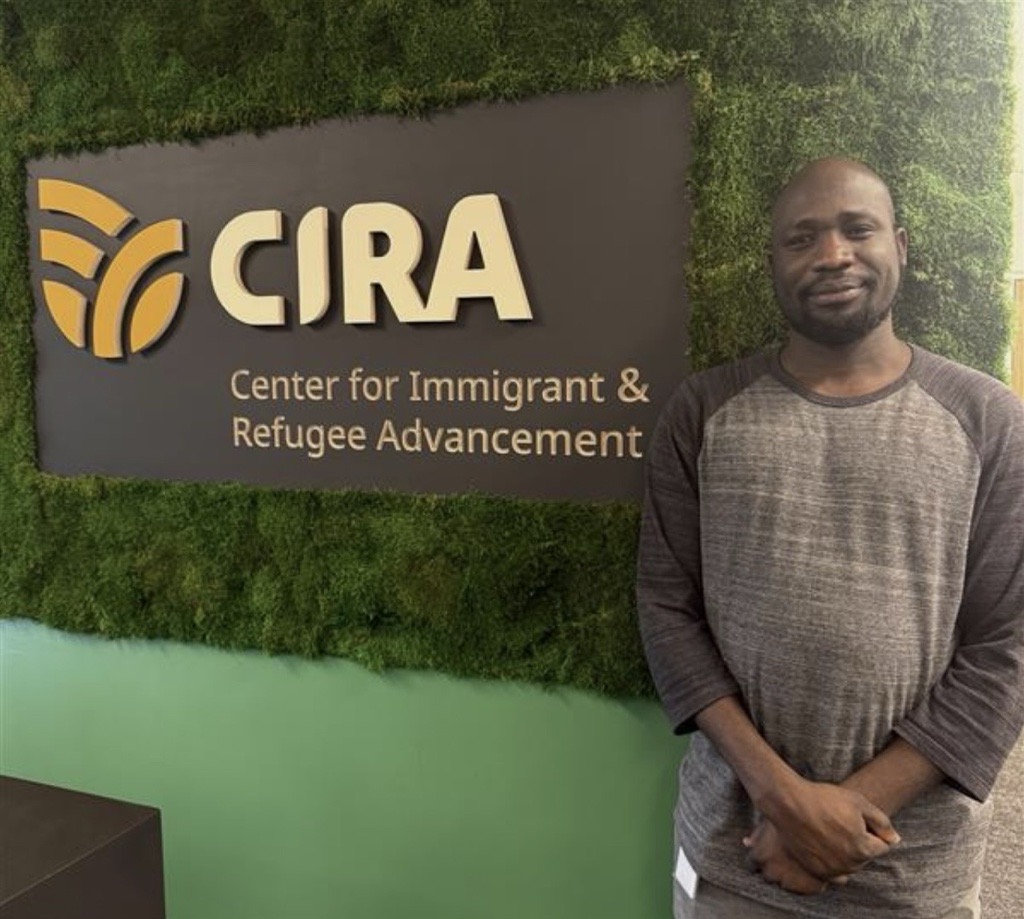
Adem Haroon Abdella loves sharing his knowledge and experiences with others. He devotes much of his time to helping new Americans feel at home in the U.S.
May 1, 2026

Omaha, Neb. — Adem Haroon Abdella devotes his time and energy toward helping new Americans find their center. He was born in Darfur, Sudan and began his journey of service and leadership in an Ethiopian refugee camp.

He resettled in the U.S. as a CIRA client, then served as a Reception and Placement (R&P) Manager before the U.S. stopped accepting new arrivals. Read more from CIRA Case Manager Adem in this exclusive Q&A after he participated as an expert panelist at a community event focused on solidarity and sanctuary for refugees in Nebraska.

Why did you want to participate in the Sanctuary and Solidarity Panel?

Thank you for this question. I find I like to spend my time sharing what I know and what knowledge I have. Whenever I share about my experience, it helps other people learn and realize where there are problems. So, when I talk to people, they might be able to gain a new understanding, answer some of their questions, and maybe even use the knowledge for research or to share it with others. I am always open to sharing my stories and sharing what I’ve learned. It’s just part of my nature. Like, when I was at school, I was always taking the opportunity to do things like this.

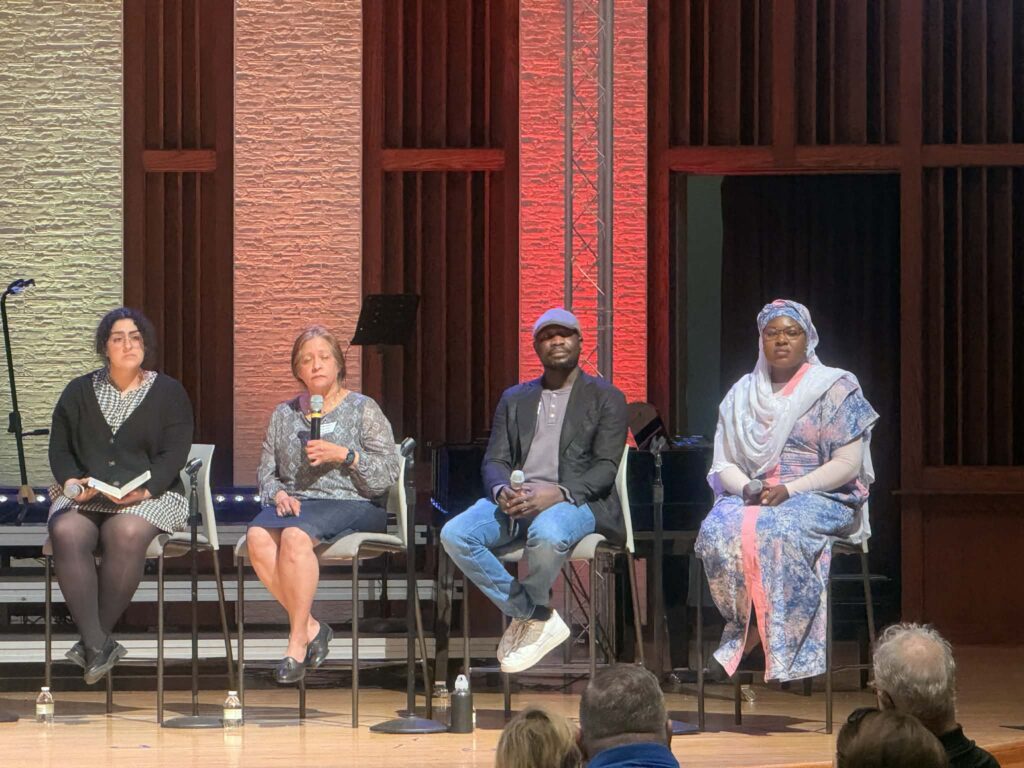
Adem spoke as an expert panelist at a community event that brought together advocates like Adem and community members to discuss how to better support refugees in Omaha through sanctuary and solidarity.
Your expertise in refugee support stems from lived experience. What do you think this perspective will add to community conversations?

We, refugee support teams, do the job. We do a lot of things on the ground, and we know how resettlement affects life. I have my own personal experience as well. So, when I work with other refugees, I channel my own experiences. When I came to the U.S., I got a job as a case manager. I already knew what it was like for the people I was assigned to work with. I knew what the process was like, what the requirements were, all of that.

The first thing to know about new arrivals* is that they only receive support for 90 days. As a case manager, you need to organize everything related to the case, that is, prepare everything for the family for when they get to the U.S. That includes picking them up at the airport, getting to know them, bring them home, giving them a tour of their new home and training them on household appliances, and many other steps. They receive a little bit of cash to help them as they transition, and then after 24 hours, you return to them. We make sure they’re doing well, find out what else they need, and what other questions they may have.

Can you describe a little bit more about what an R&P Manager did when resettlement programs were active?

I would describe my previous position as centering. You are the one who is really directing what to do. You prepare employment opportunities; you take your clients to the hospital, to the doctor. But it’s also so much more. It’s enrollment of the kids at school, taking them to meetings, and helping them with other enrollment applications like Medicaid and social security. It’s a really stressful job because someone’s life is in your hands. I worked a lot to ensure they felt settled.

What helped you stay motivated during those long hours of hard work?
Previously, I was a teacher. So, when I transitioned to refugee support, I thought “this is my real career.” I love teaching people, especially by using short stories and my personal stories. I love interacting with people rather than working behind a desk.

What is a story that has stuck with you in your work?

I have helped so many families and I love all my clients, so I can’t say one story stands out more than others. One thing I will say is that I understand human nature, so sometimes people may come to me, and they may not be in the best moods because they’re having a bad day or they’ve encountered a lot of challenges that day. When that is the case, I take a step back and think ‘What does this person need?’ before I make a judgement.

To wrap things up, what would you say is your favorite part of your job?

My favorite part of my job is teaching people. I love teaching people because I believe by teaching people, I can help them to be successful, toward change. The one thing I’ll always believe in is education, even for myself! I’m never going to stop learning! Education is the one thing because most of the refugee families, when they come here, struggle. There is a language barrier, culture shock. To bring them into our communities, they need to learn American culture, be successful in their jobs, be able to check on their kids at school, and show the teachers they can contribute as parents.

I like teaching because I just want to give more. I’ve developed programming here in which I can continue teaching and sharing my knowledge with others. If I have time to teach people, that means I have time to tell them the truth.

What is a story that has stuck with you in your work?

I have helped so many families and I love all my clients, so I can’t say one story stands out more than others. One thing I will say is that I understand human nature, so sometimes people may come to me, and they may not be in the best moods because they’re having a bad day or they’ve encountered a lot of challenges that day. When that is the case, I take a step back and think ‘What does this person need?’ before I make a judgement.

To wrap things up, what would you say is your favorite part of your job?

My favorite part of my job is teaching people. I love teaching people because I believe by teaching people, I can help them to be successful, toward change. The one thing I’ll always believe in is education, even for myself! I’m never going to stop learning! Education is the one thing because most of the refugee families, when they come here, struggle. There is a language barrier, culture shock. To bring them into our communities, they need to learn American culture, be successful in their jobs, be able to check on their kids at school, and show the teachers they can contribute as parents.

I like teaching because I just want to give more. I’ve developed programming here in which I can continue teaching and sharing my knowledge with others. If I have time to teach people, that means I have time to tell them the truth.

In 2022, Immigrant Legal Center and Refugee Empowerment Center merged, and the combined nonprofit organization is now CIRA, the Center for Immigrant & Refugee Advancement. Our diverse team of experts provides exceptional, compassionate legal representation, refugee services, and social work services. We take on the most complex immigration cases, resettle refugees from around the world, and ensure all clients have access to resources they need to live. Operating in 6 different offices from Council Bluffs to Scottsbluff, our team of more than 100 full-time employees helps communities welcome immigrants and refugees as they build their lives here. We assist with all forms of family and humanitarian-based immigration, and we never turn any family away due to inability to pay.

To empower immigrants and refugees to live confidently through high-quality legal representation, resettlement, and social work and to create welcoming communities through education and advocacy.

Newsletter sign-up

We are a 501c3 nonprofit. Our EIN number is 74-3195841. The information contained in this website is provided for informational purposes only and should not be construed as legal advice on any matter.

Copyright © 2025 CIRA. All Rights Reserved.